

Upnor Castle
An Elizabethan castle I hadn't heard of

Anyone who follows me on Instagram will know that I’ve been away on a trip the last few days to Kent, mainly to visit Hever Castle again. But with my auntie and uncle we also visited other historical properties, including Upnor Castle on the River Medway. It isn’t somewhere I’d heard of before, but we were looking at what else was close to Rochester and this English Heritage property came up, so off we went!
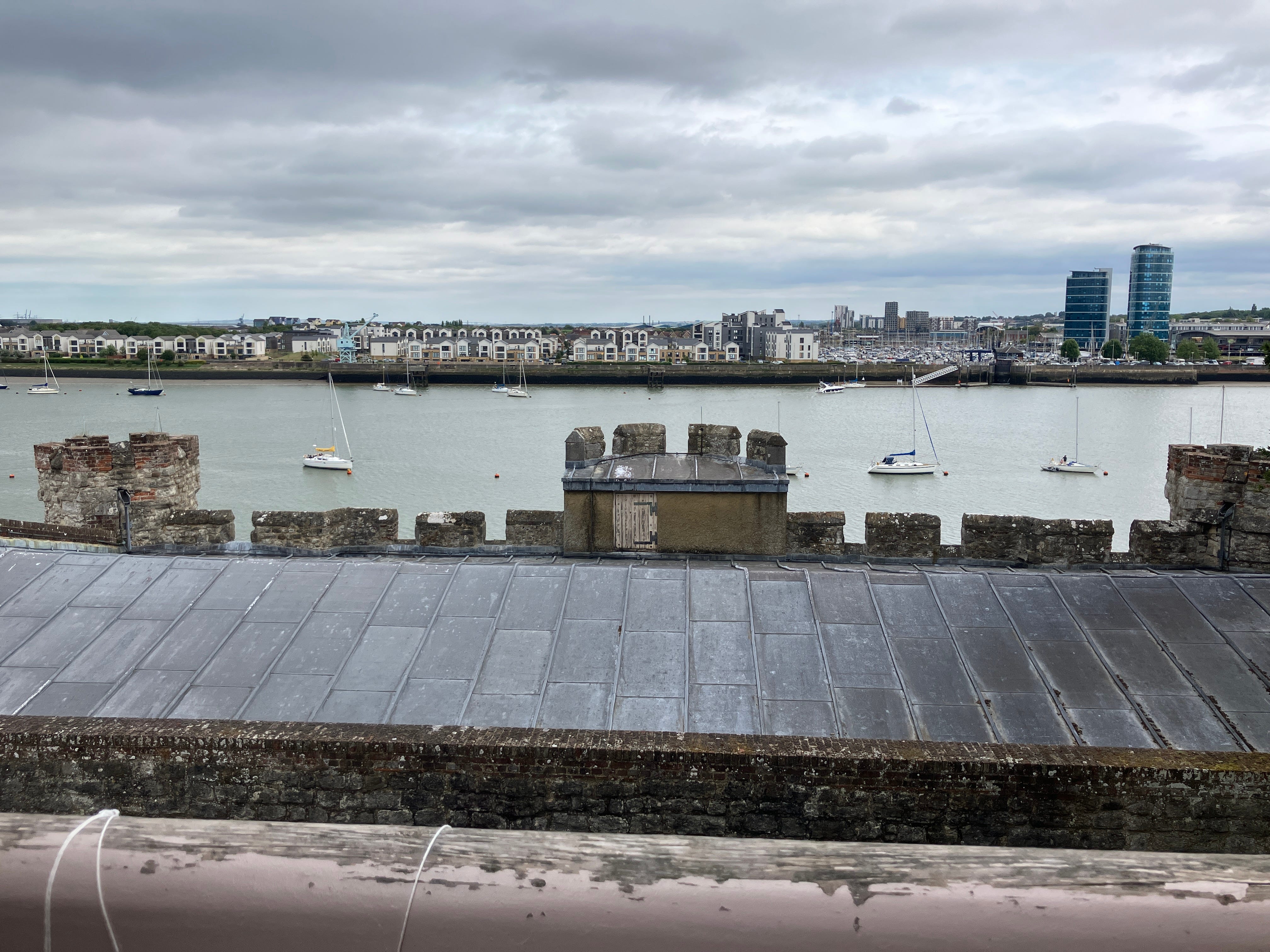
Upnor isn’t what you might immediately think of when you think of a castle. It doesn’t have an incredibly tall and imposing exterior, but it was designed to add defence to the River Medway, in fear of French, Spanish, and Dutch invasions through the late Tudor and Stuart periods. In 1547 the navy hired storehouses at Chatham, marking the beginning of what we now recognise as Chatham dockyard.
It was in 1559, just a year into Elizabeth I’s reign, that the building of Upnor Castle began, and building continued until 1567 to a design by Sir Richard Lee. It was designed as one of the lines of defence to protect the dockyard at Chatham where Royal Navy ships were being built. Another part of the defences was a chain which could be stretched across the River Medway to break the hulls of any enemy ships that tried to venture upriver to destroy the English ships at Chatham. Upnor was then expanded at the end of the Tudor period from 1599, as England was in the midst of a war with Spain. Sir John Leveson was asked to organise these upgrades to the castle to remedy weaknesses, including the addition of a timber palisade on the river side, and a curtain wall on the landside. The towers were also rebuilt with gun platforms.
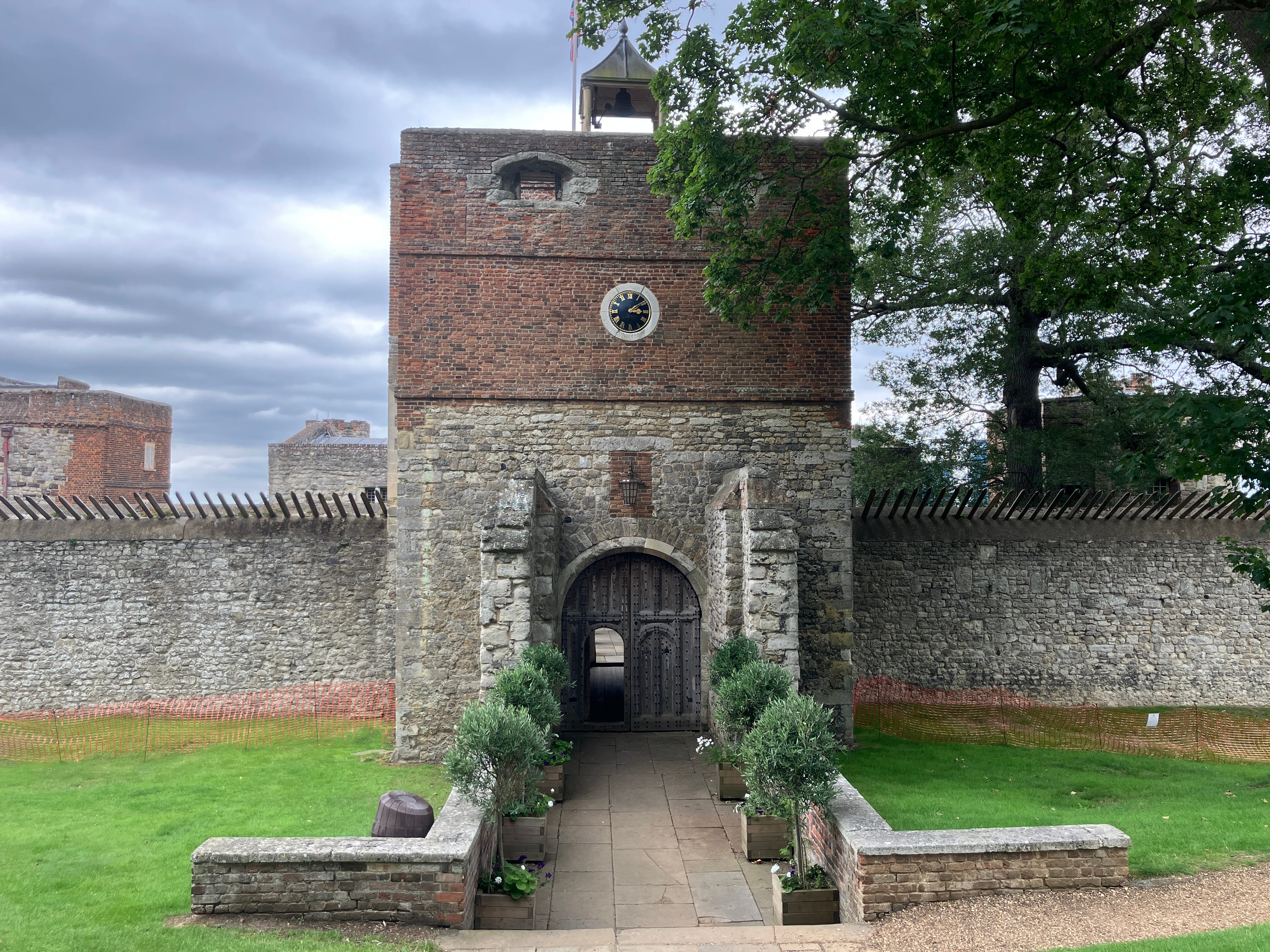
In 1653 there was a fire at the castle, and the brick upper level of the gatehouse was added in the subsequent repairs. In 1718, a barracks was built close to the castle, which is now the castle ticket office. The barracks housed the garrison for the castle, along with their families, and it was overcrowded and must have been difficult to live in.
In 1667 the Dutch raid on the Medway put Upnor at the heart of the defence of Chatham Dockyard once Sheerness, closer to the sea, had fallen. The chain across the river was put in place but appears to have broken. The Duke of Albermarle sent additional supplies to Sir Edward Scott, who was in command of Upnor Castle. Additional guns were installed along the Medway as well. The Dutch captured the flagship, Royal Charles, and they actually withdrew before reaching Chatham, though they sunk many English ships that the English hadn’t sunk themselves in the Medway to try and stop the Dutch advance.
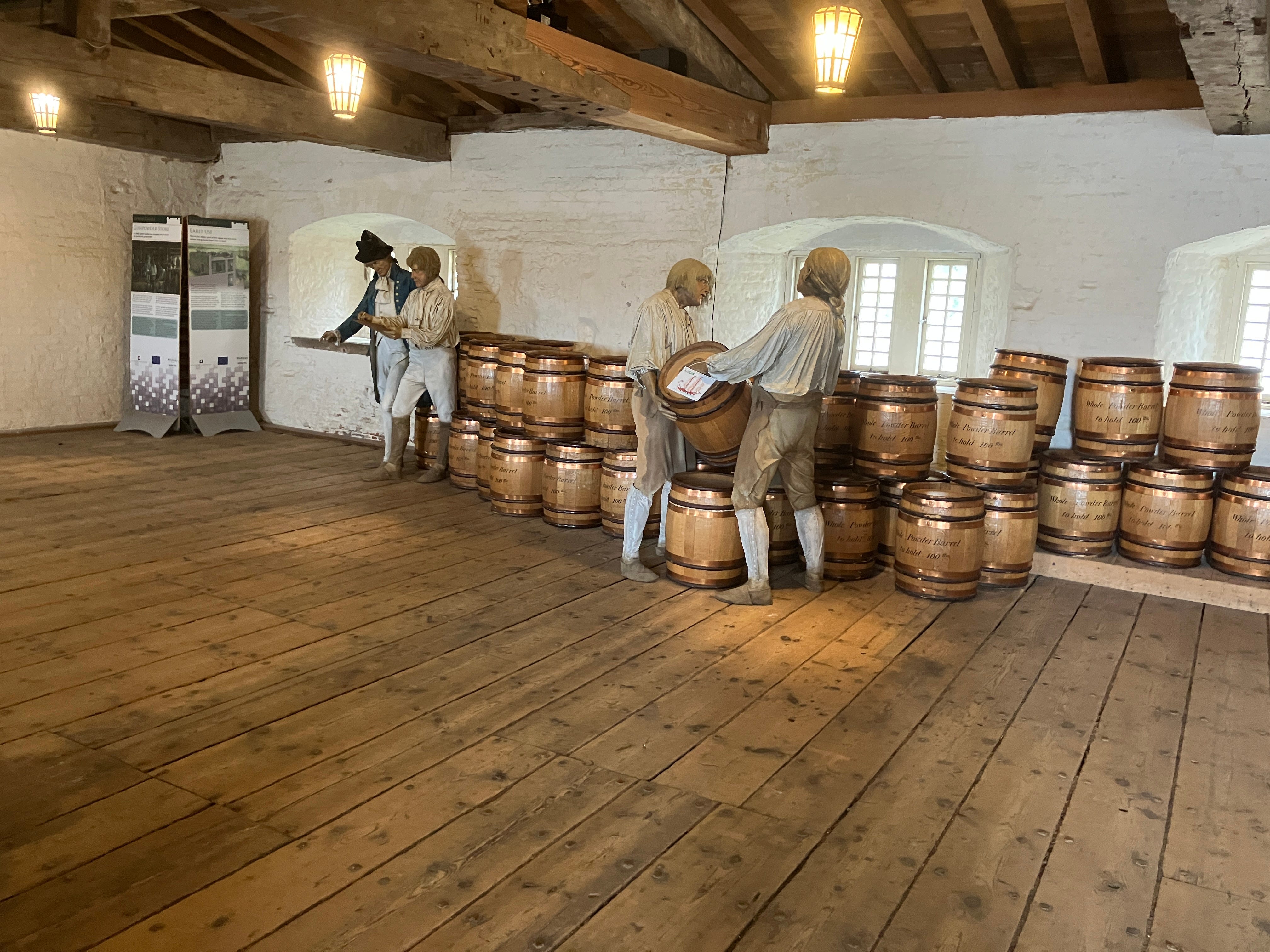
After the Dutch raid and victory, Upnor Castle was converted in 1668 into a powder magazine to store gunpowder and arms. Upnor’s relatively isolated and rural location made sure that the gunpowder was kept away from large population centres, and close to the river which meant it could be used to defend the river or transported upstream easily.
The clock and bell now visible on the landside entrance were added by the Board of Ordnance around 1809. The Board of Ordnance had developed from the Office of Ordnance with a distinct emphasis on defence. Henry VIII had reorganised his officials in the Office of Ordnance to focus on new weapons like firearms and ammunition which were coming into wider use in the Tudor period. From the 1830s Upnor was mainly an ordnance laboratory to test firearms and gunpowder. It was used again as a munitions store during the First World War but Upnor’s importance had largely been lost by this time, used only in times of crisis.
All photos are my own, information from the English Heritage guidebook and from reading the information and exhibition boards within the castle itself.
If you want to visit Upnor Castle, it is an English Heritage property, details here.
Interesting! Thanks for sharing!
Also- you mentioning that you were traveling with your aunt and uncle and stopping at castles gave me major Elizabeth Bennett vibes. 👌
ever visit Chartwell in Sevenoaks?