

Guest Post Q&A with Sophie Bacchus-Waterman
Author of 'Elizabeth Boleyn: The Life of the Queen's Mother'

Today I’m absolutely delighted to welcome to my blog and Substack Sophie Bacchus-Waterman, whose first book Elizabeth Boleyn: The Life of the Queen’s Mother is released today (30 October 2025) in the UK. I’m halfway through and I’m enjoying it immensely so you can look out for my review in the near future! I wanted to ask Sophie about her research and what she uncovered. We hear a lot about Anne Boleyn, but less about her mother, Elizabeth Boleyn, Countess of Wiltshire and Ormond.
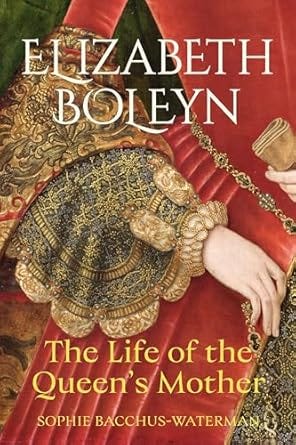
Hello Sophie, and welcome to my blog and Substack! The first question I want to ask is, why Elizabeth Boleyn? What attracted you to writing about a woman we haven’t yet had a full-length biography of?
Hi Helene, thank you so much for having me! I’m so excited to discuss my book. That’s a question I get often, and the main reason is because we haven’t had a full-length biography of Elizabeth Boleyn yet. She’s mentioned in other books – for instance, Elizabeth Norton’s The Boleyn Women, and often in biographies of Anne – but the spotlight has never been on her. I wanted to see what it was possible to learn about Elizabeth’s life in her own right. Every other member of Anne’s immediate family has had a biography of their own, so it felt like Elizabeth’s turn.
Do we know much from the contemporary sources about Elizabeth’s relationships with her children: Mary, Anne and George Boleyn?
Perhaps unsurprisingly, we know the most about her relationship with Anne during Anne’s adulthood. The two were close, and we have a lot of sources about Anne’s relationship with her mother.
However, Mary, Anne, and George must have been close to their mother in their youth – Elizabeth would have taken care of the children while Thomas was away at court. Given Anne’s closeness with Elizabeth later in life, we can assume that she was close with Mary, until Mary’s ill-advised second marriage to William Stafford. As for George, we know very little about their relationship, but as I say, they would have probably been close when George was younger, before he turned seven and was possibly sent off to receive a “boy’s” education, while Anne and Mary would have received a “feminine” education from their mother.
Do we know much about the relationship between Elizabeth and her husband, Thomas Boleyn? We don’t even seem to know when the pair married!
We can assume they were close, since they had several children in quick succession after their marriage (though we don’t know the birth orders or birth dates of the Boleyn siblings, they were probably born at the beginning of the sixteenth century). Their court careers mirrored one another – Elizabeth served in Katherine of Aragon’s household, and Thomas served in Henry VIII’s household. Their careers mirrored and complimented one another’s, and they must have had a professional relationship that has been lost to time.
Elizabeth was also trusted by Thomas. She spent a lot of time at Hever, especially in the early 1520s, and would have been entrusted with running the household and organising things there while Thomas was away at court. In 1531, Thomas and Elizabeth chose to assure Elizabeth’s jointure – essentially, they made sure that, should Thomas predecease her, Elizabeth would own Thomas’ vast estates, including Hever. While we don’t know why they chose to do this at that point, it proves that they must have been close, as Thomas wanted to provide for Elizabeth in the event of his death.
There are a few more exciting discoveries in the book which point to Thomas and Elizabeth’s relationship, so readers will have to wait and see what those are!
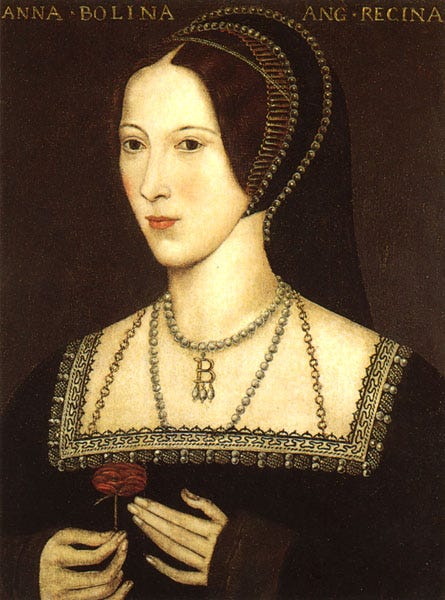
We know that Elizabeth Boleyn served in Katherine of Aragon’s household, so that must have been difficult for her when her daughter, Anne, caught the king’s attention. Have you found out much about how Elizabeth navigated the Great Matter?
I think that Elizabeth was a lot more involved in the Great Matter than we have allowed for. As I’ve said, she and Anne were close, and they must have talked about what was going on. For instance, when Anne was receiving Henry’s famous love letters at Hever, Elizabeth was also there – she’s even mentioned in one of Henry’s letters! I think Elizabeth’s involvement in the entire situation has been overlooked due to a lack of direct surviving sources, but Anne must have relied on her mother during this time.
Elizabeth chaperoned Anne during the Great Matter – we have several references to her in Anne’s company. It must have been very odd for Elizabeth to return to court, having seemingly left Katherine of Aragon’s service in 1522, but she was there to make sure that everything stayed “proper” between Henry and Anne. This also speaks to her closeness with Anne, as the two were very often with each other, and Anne must have sought her mother’s advice and support.
Was there something particularly interesting or surprising about Elizabeth that you found out during the course of your research?
I was amazed to find out that Elizabeth spent some of her teenage years with Margary Wentworth at Sherrif Hutton Castle in Yorkshire! Margary (later the mother of Jane Seymour) was in the household of Elizabeth Tylney, Elizabeth Boleyn’s mother. The two women spent their teenage years together, and John Skelton wrote about them both in his poem The Garland of the Laurel. Unfortunately, we don’t know anything about their relationship, but it’s fascinating to think about the two of them living together for a time in their youth.
How difficult was it to find contemporary sources about Elizabeth Boleyn and do you have a favourite source you used?
It was difficult to find direct references to Elizabeth Boleyn in sources, which is why I had to fill those gaps with educated speculation. One of the techniques I used is called “reading against the grain”, where you read a historical source at a slightly different angle – for instance, Hall’s Chronicle mentions Katherine of Aragon’s ladies on several occasions. We know that Elizabeth was in Katherine’s household, so we’re able to know where Elizabeth was at certain points because of what Hall says.
One of my favourite sources was the pay-books of James Nedeham. These manuscripts are still extant in the Bodleian Library, and they record payments made during Anne Boleyn’s queenship. Throughout, there are references to repairs to Elizabeth chambers in palaces and castles across the country. That was a wonderful source for proving that Elizabeth was much more present at court than we’ve thought.
Elizabeth Boleyn often gets a poor showing in popular culture (I’m looking at you, Showtime’s The Tudors!), why do you think this is?
I think it’s partly due to a lack of surviving sources! We have very little direct evidence of Elizabeth’s life, and because no one had written a biography focused on her before, showrunners and filmmakers couldn’t turn to non-fiction for inspiration. I also think it’s because it could be argued that Elizabeth serves no “narrative purpose” in stories about Anne’s life – Thomas is often the villain, Mary is the sister who serves as Anne’s opposite, George has to be there because of their eventual downfall. But Elizabeth is often left out!
I really hope this changes in the future, and Elizabeth is included more often in dramatizations. We know that she and Anne were close, and we know that Elizabeth had a whole court career of her own. I think we have left Elizabeth out of popular culture depictions to our detriment.
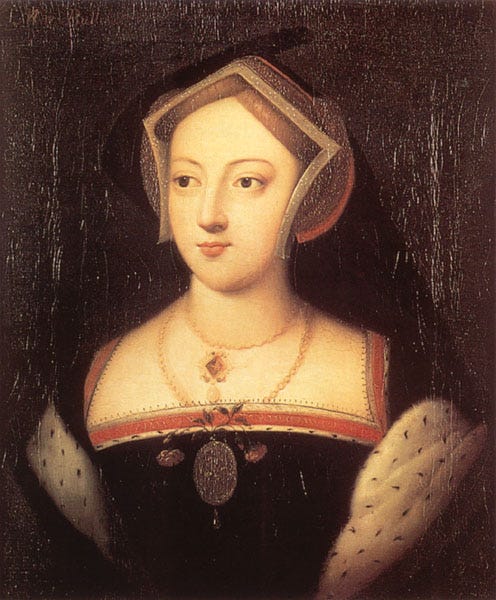
If you could ask Elizabeth Boleyn one question and get an honest answer, what would it be?
I would love to know how Elizabeth felt about Anne’s rise to queenship. I have speculated on this in the book, and I think her actions can suggest how she felt, but I would love to discuss it with her. How did she feel about Anne marrying Henry, given his relationship with Mary? Was she proud of Anne, scared for her, disappointed? We will never know, but I would love to talk to her about how she felt on the day of Anne’s coronation.
How do you approach starting a project like this where so little seems to have been done before on the person and did it feel overwhelming at any time?
I started by putting together every direct reference we have to Elizabeth, using secondary sources and easily accessible primary sources (like Letters and Papers). Where I was left with gaps, I then worked out how to fill them – as I mentioned before, looking for broader references to Katherine of Aragon’s household, or looking at what a woman running a household like Hever would have done with her time.
It did feel overwhelming at times, because I wasn’t sure how much to focus on Elizabeth herself, and how much to bring in from the broader historical situation. I settled on trying to find a balance but keep the focus on Elizabeth. There are plenty of books about the political situation in England during Anne’s rise! This wasn’t that book – I wanted to keep Elizabeth at the centre of the story.
What is your favourite and least favourite part of the writing process?
My favourite part was using my imagination to bring somewhat dry sources to life. We have a lot of household lists of Katherine of Aragon’s household, so we know Elizabeth was there, but how can we use those to imagine day to day life at court? We know that Elizabeth lost two sons in infancy – Thomas and Henry – and all we have of them are two small crosses. But can we imagine the stories behind their births and deaths? I think readers expect you to have done the research, so it’s your job to bring history to life for them.
My least favourite part was the dates! I was constantly panicking about making sure I had everything in the right order, and that I hadn’t misdated something. Especially when you’re covering a person’s whole life and doing so much new research in the archives – I think it’s so easy to get confused about dates.
If you could invite three Tudor people to dinner, who would you choose?
I would love to invite the three Boleyn women! Elizabeth, Mary, and Anne. I think Mary is just as “shadowy” of a figure as Elizabeth, and I would love to sit down and talk with her about how she felt about her own relationship with Henry, her family turning their backs on her, her sister’s queenship, everything! I think we could all have a wonderful conversation.
What are you currently researching or working on?
I have been co-authoring a paper with a friend for almost three years! Now my book is out, we can finally focus on that and hopefully get it submitted for peer review at the end of the year. Stay tuned, because that involves something very exciting for anyone interested in the Boleyn family!
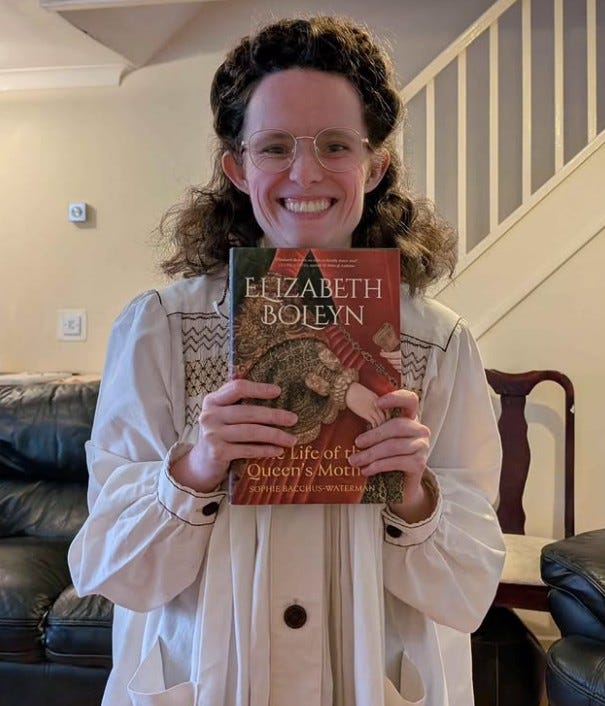
Author Bio
Sophie Bacchus-Waterman is a Tudor historian and an Associate Fellow of the Royal Historical Society. She has written for publications such as The Court Historian and the Papers of the Bibliographical Society of America and appeared on several popular history podcasts. She is the first person to write a full biography dedicated to Elizabeth Boleyn.
Social Media
Instagram as @sophiebwaterman
Blue Sky as @sophiebwaterman.bsky.social
Sophie’s books:
Very informative interview. I admire your hard work.
Thank you,
Pat
Great interview!